How can human beings live with clarity, balance, and awareness in a world of relentless change, fragmentation, and noise?
The Inner Path: Awareness in a Changing World is a work of integrative philosophical non-fiction.
Drawing on decades of philosophical inquiry, scientific training, and lived engagement with multiple traditions of thought, Dr Ghadirizare guides the reader on an inward journey — not of withdrawal from the world, but of deeper engagement with it. The book argues that awareness is not a passive state but a cultivated capacity; that the examined life, far from being a luxury, is the only sustainable response to modernity.
What distinguishes this book is its range and integration. It weaves together modern thinkers on consciousness (Eckhart Tolle, Deepak Chopra, Joe Dispenza), classical Persian wisdom (Rumi, Hafez, Saadi, Khayyam, Ferdowsi, Avicenna), insights from religious traditions (Noah, Moses, Jesus, Muhammad), and perspectives from quantum physics — not to blur their differences, but to reveal their convergence on a shared question: what does it mean to observe one's life clearly?
The book is written for a thoughtful general readership. It does not ask the reader to adopt any belief system. It invites reflection. As the author writes in the Preface: "The intention is not to persuade, but to invite reflection."
Human experience is shaped not only by external events, but by the awareness through which those events are perceived. Perception is not neutral. Thought is not passive. Attention is not incidental. The Inner Path argues that by cultivating genuine awareness — across the physical, psychological, mental, and spiritual dimensions of life — individuals can move from unconscious repetition toward conscious, purposeful living.
Crucially, this is not presented as abstract philosophy. It is grounded in daily life: in how one speaks, listens, responds to difficulty, and relates to others. The inner path, as the author writes, "is not separate from ordinary life. It unfolds within it."
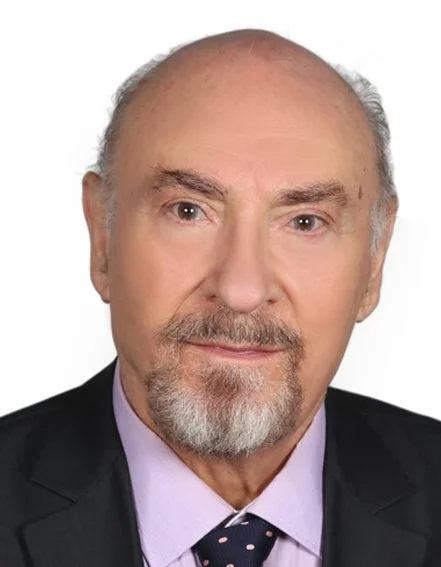
Why I wrote this book:
This book began with a question: What if wellbeing depends not only on the care we receive, but also on how consciously we live?
Approximately twenty years ago, I entered one of the most difficult periods of my life. Following an angiogram, I was told that one of my coronary arteries was completely blocked. After consulting several specialists and cardiac centres, I was advised to undergo open-heart surgery, an operation considered particularly risky in my circumstances. At the same time, severe knee problems had left me barely able to walk, and knee-replacement surgery was also recommended.
Faced with these circumstances, I began to question not only what I should do, but how I was living.
After careful consideration, I chose not to proceed with either operation. Instead, I began a gradual process of examining my life and applying many of the principles explored in this book: greater attention to lifestyle and physical activity, deeper awareness of my thoughts and emotions, greater mental and emotional balance, and an exploration of the spiritual dimension of human existence.
There was no sudden transformation. It was a gradual, conscious journey, and I do not present my experience as a prescription or a path that others should follow.
Today, my life is very different. I feel healthy and active. I exercise for several hours each day and can walk up to ten kilometres without knee pain. The contrast between my life today and my physical condition twenty years ago, documented in my NHS medical records, has profoundly influenced both my thinking and this book.
From that experience grew a deeper sense of responsibility, or what might be described as dharma: a duty or purpose in life. I came to believe that what I had experienced and learned should not remain private. If it could encourage even one person to examine more consciously how they live, think, feel and relate to themselves and the world around them, it was worth sharing.
This book grew from that conviction.
It explores the possibility that wellbeing is shaped not by one dimension of life alone, but by the relationship between the physical, psychological, mental and spiritual aspects of our existence. It asks what may become possible when we participate consciously in our own wellbeing rather than seeing ourselves as passive observers of it.
This is not an argument against medicine, surgery or professional medical advice. Modern medicine can be essential and life-saving, and every person’s circumstances are unique. My decisions were mine alone. This book is an invitation to consider what we may contribute to our own wellbeing and, where medically appropriate, how supportive approaches might complement conventional care.
I offer neither my experience as proof nor this book as a collection of final answers. I offer a life lived, lessons learned and questions worth asking.
My purpose is simple: to share what this journey has taught me and to inspire others to live with greater awareness of their bodies, minds, inner lives and relationship with the ever-changing world around them.